
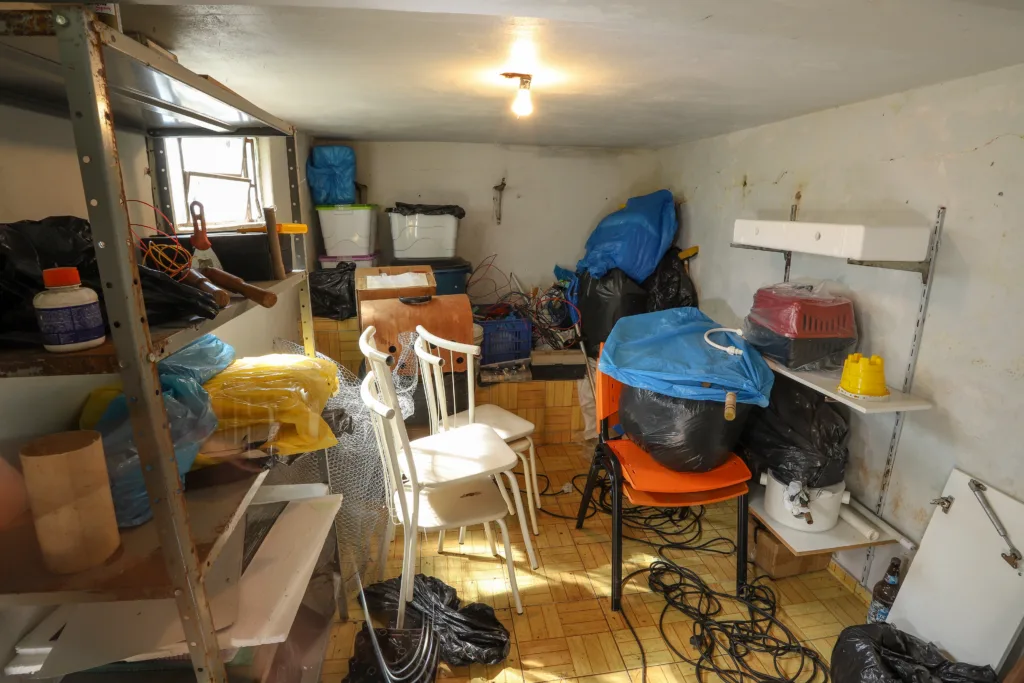
Losing someone you love turns everything upside down. In the middle of the grief, the phone calls, the arrangements, and the paperwork, there’s often a basement full of a lifetime’s worth of belongings quietly waiting. Nobody warns you about that part. Nobody tells you that one of the hardest things you’ll face isn’t the funeral — it’s standing at the top of those basement stairs, not knowing where to begin.
A basement cleanout after death is one of the most emotionally and physically demanding tasks a family can face. It’s not just heavy furniture and dusty boxes. It’s decades of memories, decisions that feel impossible to make, and a space that can bring grief rushing back with every bag you open. There’s no instruction manual for it — and there shouldn’t have to be.
How Does a Basement Cleanout After Death Work?
There’s no single way a basement cleanout after death unfolds — every family, every home, and every situation is different. But having a clear process helps. It turns something that feels impossible into something manageable, one step at a time. Here’s how we approach it at Clean Estates, and what you can expect from start to finish.
Step 1 — Assess What You’re Working With
Before anything gets moved, touched, or removed, take time to walk through the space with fresh eyes. This first step is about understanding the scope — how much is there, what condition it’s in, and whether anything needs immediate attention like water damage, mold, or safety hazards.
If possible, do this walk-through with another family member or a trusted person who can help you stay grounded. It’s easy to feel overwhelmed the moment you open the door. That’s completely normal. You don’t need to make any decisions yet — you’re just getting the lay of the land. When our team at Clean Estates comes for an initial assessment, this is exactly what we do too. We walk the space with you, ask the right questions, and give you an honest picture of what the job involves before anything else happens.
Step 2 — Sort and Separate With Care
Once you have a sense of what’s there, sorting begins. This is often the most time-consuming part — and the most emotional. The goal is to create clear categories for everything in the space:
- Keep — items with sentimental or practical value that family members want to hold onto
- Donate — items in good condition that can go to local charities or shelters
- Sell — anything with monetary value worth including in an estate sale
- Recycle — materials that can be processed responsibly rather than thrown away
- Dispose — items that are damaged, broken, or beyond use
Take your time here. Don’t let anyone rush you through this step, including yourself. If you hit a box that’s too hard to deal with right now, set it aside and come back to it. A good cleanout team understands that sorting through a loved one’s belongings isn’t a race — it’s a process that deserves patience and respect.
Step 3 — Remove, Haul, and Dispose Responsibly
Once sorting is done, the physical work begins. This means hauling furniture, appliances, boxes, and everything else up the stairs, out the door, and into the appropriate vehicles for donation, recycling, or disposal. It’s hard, heavy work — and it requires the right equipment, the right crew size, and the experience to do it efficiently without damaging the property.
This is where having a professional estate cleanout service makes the biggest difference. Our team at Clean Estates handles all of the lifting, loading, and logistics so your family doesn’t have to. We coordinate donation drop-offs, sort recyclables, and ensure that everything leaving the property is handled responsibly. Landfill is always our last resort — we’d rather find a second home for something than add to the waste.
Step 4 — Leave the Space Clean and Ready
The final step is one that often surprises people — a real cleanout doesn’t end when the last box leaves. It ends when the space itself is clean. That means sweeping, clearing any remaining debris, and leaving the basement in a condition that’s ready for whatever comes next — whether that’s a property sale, a renovation, or simply giving the family a sense of closure.
At Clean Estates, we don’t consider the job done until the space looks like a space again — not a storage unit, not a reminder of everything that just happened, but a clean, clear room with real possibility ahead of it.
When Should You Start?
This is one of the questions we hear most often, and honestly, it’s one of the hardest to answer — because there’s no single right time. Grief doesn’t follow a schedule, and neither does the process of clearing out a loved one’s home. What we can tell you is this: whenever you’re ready is the right time, and there’s no shame in needing more time than you expected.
That said, there are a few practical realities worth knowing about, because sometimes the timeline isn’t entirely up to you.
If The Home Is Going Up For Sale
Timing becomes more pressing. Real estate agents, executors, and probate courts often work against deadlines — showings, closing dates, and legal filings don’t wait for grief to settle. In these situations, starting the basement cleanout after death sooner rather than later gives your family more breathing room and fewer last-minute decisions made under pressure. Knowing what’s in the basement early also helps with estate valuations, especially if there are items worth selling.
If The Estate Is In Probate
It’s worth checking with the estate attorney before removing or donating anything significant. Probate laws vary by state, and in some cases certain assets need to be inventoried or appraised before they can be distributed or discarded. This doesn’t mean everything has to stop — it just means having a conversation with the right people first. Our team at Clean Estates is experienced in working within probate timelines and can coordinate with attorneys, realtors, and family members to make sure everything moves in the right order.
If The Home Isn’t Being Sold Right Away
You have more flexibility — but that flexibility can sometimes work against you. The longer a basement sits untouched, the more emotionally charged it can feel each time you try to face it. Moisture, pests, and deterioration can also become issues over time, particularly with older homes. Starting — even slowly, even just with the assessment step — tends to be easier than waiting for a moment that feels perfectly ready. That moment rarely comes on its own.
Whatever your situation, the most important thing is that you don’t feel pressured to move faster than you’re able to. At Clean Estates, we work on your timeline — not ours. We’ve helped families who needed things done in 48 hours and families who needed several weeks to feel ready. Both are completely valid, and we’ll meet you wherever you are.
What You’ll Typically Find in a Loved One’s Basement
One of the things that makes a basement cleanout after death so overwhelming is not knowing what you’re really dealing with until you’re standing in the middle of it. Over the course of a lifetime, basements become the home’s unofficial storage space — the place where things go when there’s no room anywhere else, or when the decision of what to do with something gets postponed indefinitely.
Every basement is different, but after years of working alongside families across Southeastern Pennsylvania and Central New Jersey, we’ve seen enough to know that most of them share a lot in common. Here’s what you’ll typically find:
- Furniture — old sofas, chairs, bed frames, dressers, and dining sets that were replaced but never removed
- Appliances — outdated refrigerators, washing machines, dryers, dehumidifiers, and water heaters
- Tools and equipment — hand tools, power tools, lawn equipment, and hardware accumulated over decades
- Holiday decorations — boxes of Christmas ornaments, Halloween props, and seasonal items collected over a lifetime
- Clothing and textiles — bags of old clothes, linens, curtains, and fabric that never made it to donation
- Boxes of documents and paperwork — old tax returns, bills, manuals, and sometimes important legal or financial documents that need to be carefully reviewed before anything is discarded
- Books, records, and media — vinyl records, VHS tapes, DVDs, and bookshelves full of titles collected over the years
- Sentimental items and family heirlooms — photo albums, keepsakes, childhood mementos, and items that carry enormous emotional weight
- Exercise equipment — treadmills, stationary bikes, and weight sets that have become expensive coat racks
- Construction materials and paint — leftover lumber, tiles, old paint cans, and renovation supplies from projects long finished
- Hazardous materials — old chemicals, solvents, pesticides, and other substances that require special handling and cannot simply be thrown in the trash
That last category is worth paying special attention to. Hazardous materials are more common in basements than most families expect, and improper disposal can create real problems. A professional basement cleanout team knows exactly how to identify and handle these items safely and in compliance with local regulations — something that’s easy to overlook when you’re doing it on your own.
It’s also worth taking your time with the documents and sentimental items. Before anything gets removed from the basement, make sure someone has gone through boxes carefully enough to pull out anything irreplaceable — financial records, legal documents, photographs, and personal letters deserve a second look before they leave the house.
What Happens to Everything After the Cleanout?
One of the biggest concerns families have before starting a basement cleanout after death is what actually happens to everything once it leaves the house. It’s a fair question — and an important one. These aren’t just random items. They belonged to someone you loved, and how they’re handled matters.
At Clean Estates, we don’t take that lightly. Everything that leaves a property goes somewhere intentional. Here’s how we think about it.
Items That Can Be Donated
Usable items — furniture in good condition, clothing, kitchenware, books, linens, and household goods — are donated to local charities and shelters whenever possible. We have established relationships with organizations across Philadelphia, Bucks County, Montgomery County, and the surrounding areas that are grateful for quality donations and put them to immediate use.
Donation is always our first instinct. If something still has life in it, it deserves a second one. We also provide donation receipts and documentation for drop-offs, which can be valuable if the estate is eligible for a charitable deduction. It’s one less thing for your family to coordinate, and one more way we try to make the process feel meaningful rather than just transactional.
Items That Can Be Recycled
Not everything that can’t be donated needs to go to a landfill. Metals, electronics, certain appliances, and a range of other materials can be processed responsibly through recycling facilities. Our team sorts these items carefully during every basement cleanout and ensures they reach the right facilities rather than contributing unnecessarily to waste.
This matters to us — not just because it’s the right thing to do, but because it reflects a value we bring to every job. Families trust us with a loved one’s belongings, and we take that seriously from the moment we arrive to the moment the last item is processed.
Items That Need Proper Disposal
Some items can’t be donated or recycled — and a smaller number require special handling entirely. Old paint cans, chemical solvents, pesticides, certain electronics, and other hazardous materials fall into a category that has specific disposal requirements under local and state regulations.
Handling these incorrectly isn’t just an environmental concern — it can create legal and safety issues for the family managing the estate. Our team at Clean Estates knows exactly how to identify, separate, and dispose of these materials properly, so your family never has to worry about whether something was handled the right way. We take care of it — correctly, completely, and without cutting corners.
Items Worth Selling — Estate Sales
Before anything leaves the property, it’s worth asking whether some of it has real monetary value. Antique furniture, collectibles, vintage tools, jewelry, artwork, and other items can sometimes be worth significantly more than families realize — and selling them through an estate sale can help offset the cost of the cleanout itself.
At Clean Estates, we offer estate sales services designed specifically for families in transition. We help identify items of value, coordinate the sale process, and handle the details so your family doesn’t have to manage yet another moving piece during an already difficult time. In some cases, families are genuinely surprised by what their loved one’s belongings are worth — and an estate sale turns what felt like a burden into something that actually helps.
If you’re not sure whether an estate sale makes sense for your situation, just ask us when you reach out. We’ll give you an honest answer with no pressure either way.
What to Look for When Hiring an Estate Cleanout Company
Not every cleanout company is equipped to handle the emotional and logistical complexity of an estate situation. When you’re inviting a team into a loved one’s home during one of the hardest periods of your life, who you hire matters. Here’s what to look for:
- Licensed and insured. This is non-negotiable. A legitimate estate cleanout service should carry full licensing and insurance before they set foot in the property. It protects you, the estate, and everyone involved.
- Experience with estate situations. A general junk removal company and an estate cleanout specialist are not the same thing. Look for a team that understands the emotional weight of the work, can navigate probate timelines, and knows how to handle sensitive items with care — not just efficiency.
- Transparent, upfront pricing. Hidden fees are the last thing a grieving family should have to deal with. The right company gives you a clear, honest quote before work begins — and sticks to it. No surprises at the end of the job.
- A compassionate, judgment-free approach. The team’s attitude matters as much as their skill set. You want people who show up with patience and respect, not just muscle. A basement cleanout after death is not a routine haul — it deserves to be treated accordingly.
- Donation and recycling as a priority. Ask any company you’re considering what happens to the items after they leave. A company that cares will have a real answer — not just “we take it to the dump.”
Frequently Asked Questions About Basement Cleanouts After a Loss
How Long Does a Basement Cleanout After Death Typically Take?
It depends on the size of the space and how much has accumulated over the years — but most basement cleanouts are completed in a single day with a professional crew. Larger or more complex situations may take two days. When you reach out to Clean Estates, we assess the scope upfront and give you a realistic timeline before we begin so there are no surprises.
Do I Need to Be Present During the Cleanout?
Not necessarily. Many of the families we work with are managing estates from out of state or simply can’t be there in person. We can coordinate access through a key, lockbox, or a trusted contact, and we keep you informed throughout the process with updates so you always know what’s happening — even if you’re not on-site.
What If I’m Not Sure What to Keep or Throw Away?
This is one of the most common concerns we hear, and it’s completely understandable. Our team never discards anything without direction from the family first. If you’re unsure about certain items, we set them aside so you have time to decide. Nothing leaves the property without your knowledge — that’s a standard we hold on every single job.
Can You Work Around a Probate or Estate Sale Timeline?
Absolutely. We’re experienced in working alongside estate attorneys, executors, and real estate agents, and we understand that legal and financial deadlines don’t always leave much room. Whether you need us to move quickly or work in phases around a court or closing timeline, we’ll structure the job to fit your situation — not the other way around.
What If the Basement Has Hazardous Materials?
It’s more common than most families expect, and it’s nothing to be embarrassed about. Old paint, chemicals, solvents, and similar materials require specific handling that goes beyond a standard basement cleanout. Our team knows how to identify these items, separate them safely, and ensure they’re disposed of in compliance with local regulations. Just let us know what you’re aware of when you reach out, and we’ll come prepared.
Let Clean Estates Help You Move Forward
Facing a basement cleanout after death is never easy. It asks a lot of you — physically, emotionally, and logistically — at a time when you’re already carrying more than enough. You shouldn’t have to figure it out alone, and you shouldn’t have to hand it off to a team that treats it like just another job.
At Clean Estates, we built this company around exactly these moments. Our founder came to this work as a former paramedic — someone who spent years showing up for people in their hardest, most vulnerable moments and learned that presence, patience, and genuine care matter just as much as getting the job done. That foundation shapes everything about how our team operates, from the first phone call to the final walkthrough.
We proudly serve families across Philadelphia, Bucks County, Montgomery County, Lehigh County, and Mercer County, NJ — and we show up to every job the same way: with muscle, with heart, and with zero judgment.
If you’re ready to take the next step — or even just ready to talk through what the process might look like for your situation — we’re here. No pressure, no sales pitch. Just real people who genuinely want to help your family move forward with professional basement cleanout services.
Contact Clean Estates today for a free quote. Call or text us at (570) 359-5544 or visit cleanestatesllc.com to get started.