
Planning an estate sale can feel overwhelming, especially during an already emotional time. Whether you’re managing a loved one’s home, downsizing, or preparing a property for sale, one of the first questions families ask is: what items typically sell at an estate sale?
It’s a smart question.
Not everything in a home holds resale value, and understanding what buyers are actually looking for can help you set realistic expectations. Some items sell quickly and attract serious interest, while others may be better suited for donation or removal after the sale.
What Items Typically Sell at an Estate Sale? When to Call an Estate Sale Service
Planning an estate sale can feel overwhelming, especially during an already emotional time. Whether you’re managing a loved one’s home, downsizing, or preparing a property for sale, one of the first questions families ask is: what items typically sell at an estate sale?
It’s a smart question.
Not everything in a home holds resale value, and understanding what buyers are actually looking for can help you set realistic expectations. Some items sell quickly and attract serious interest, while others may be better suited for donation or removal after the sale.
If you’re wondering what items typically sell at an estate sale, you’re likely also trying to decide whether hosting a sale makes sense — or if working with a professional estate sale service would make the process easier. In many cases, it’s not just about what sells. It’s about how to manage everything that doesn’t.
In this guide, we’ll break down:
- The types of items that perform well at estate sales
- What cannot legally be sold in Pennsylvania
- Whether you need a permit to hold an estate sale
- What happens to unsold items
- And when it makes sense to call in experienced help
If you’re preparing for an estate transition in Philadelphia or the surrounding counties, this will give you a clear, straightforward starting point.
Let me know if you’d like any tone adjustments before we move to the first section.
What Items Typically Sell at an Estate Sale?
If you’re asking what items typically sell at an estate sale, you’re really asking what buyers are actively searching for. Estate sale shoppers aren’t just browsing — many come with specific goals. Some are collectors. Some are resellers. Others are homeowners looking for quality pieces at fair prices.
Understanding demand helps you decide whether hosting a sale makes sense and what kind of return you can reasonably expect.
Here’s what tends to perform well.
Furniture That Holds Value
Furniture is often one of the biggest draws at an estate sale — but not all furniture sells equally.
Pieces that typically attract buyers include:
- Solid wood furniture (especially oak, cherry, walnut, or mahogany)
- Mid-century modern designs
- Vintage bedroom sets and dining tables
- Well-maintained accent pieces
- Branded or designer furniture
Quality matters. Buyers look for durability, craftsmanship, and condition. In areas like Bucks and Montgomery County, traditional and colonial-style pieces often move quickly, especially if they’re clean and structurally sound.
Oversized, heavily worn, or outdated upholstered furniture tends to struggle unless priced very competitively.
Jewelry, Watches & Collectibles
Jewelry is almost always a top seller.
Gold and silver pieces, even broken ones, carry intrinsic value. Costume jewelry from known brands can also generate strong interest. Watches — especially recognizable names — can draw serious buyers.
Other high-demand collectibles include:
- Coin collections
- Sports memorabilia
- Vintage toys
- Trading cards
- Military memorabilia
Collectors often arrive early and come prepared. If you’re evaluating what items typically sell at an estate sale, this category consistently ranks near the top.
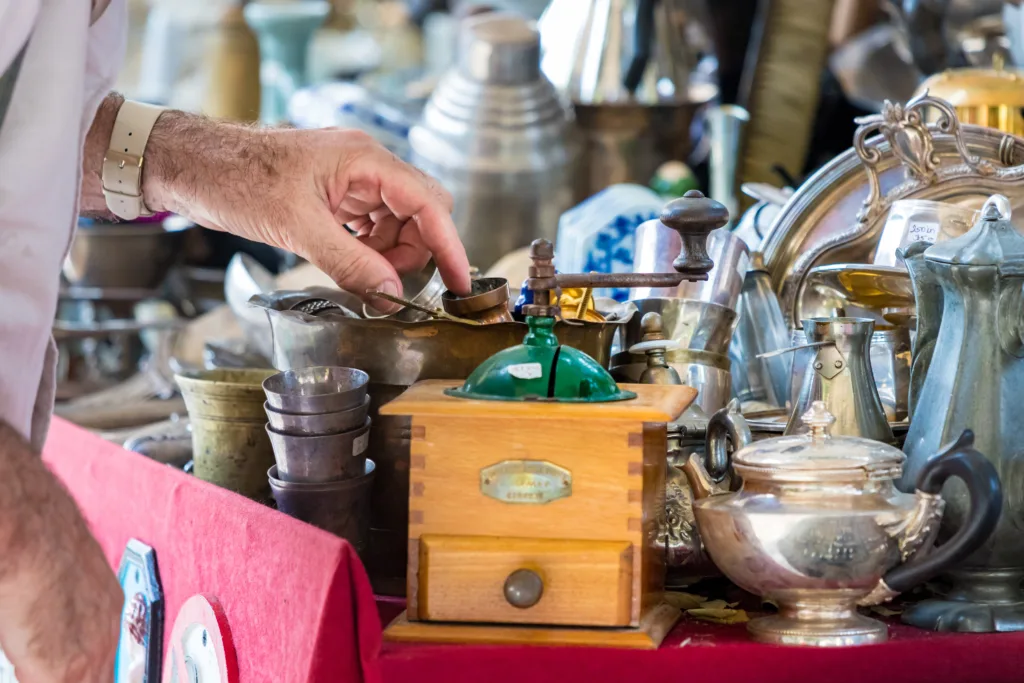
Vintage Décor & Antiques
Buyers love items with character.
Popular décor items include:
- Antique lamps
- Framed artwork
- Mirrors
- China sets
- Vintage holiday decorations
- Pyrex and retro kitchenware
Condition and authenticity play a big role. Items with original markings, maker’s stamps, or documented history often sell faster.
Not everything labeled “antique” will command high prices, but unique pieces with charm and quality craftsmanship almost always attract attention.
Tools, Lawn Equipment & Garage Items
This category performs especially well in Pennsylvania suburbs.
Garage contents are often overlooked — but they’re frequently profitable.
Items that move quickly include:
- Power tools
- Hand tools in good condition
- Lawn mowers
- Snow blowers
- Yard equipment
- Generators
In areas like Philadelphia’s surrounding counties, practical buyers show up specifically for these items. If the equipment works and is priced fairly, it typically sells.
Everyday Household Goods
Many families are surprised to learn that everyday items can sell steadily throughout the day.
These include:
- Dishes and glassware
- Small kitchen appliances
- Pots and pans
- Lamps
- Small tables
- Books
- Home décor
While these items may not command high individual prices, volume sales add up. Estate sales are rarely about one big-ticket item — they’re about consistent movement across multiple categories.
When evaluating what items typically sell at an estate sale, it’s helpful to think broadly. A well-organized sale gives buyers options at every price point.
What Cannot Be Sold at an Estate Sale in Pennsylvania?
Just as important as knowing what sells is understanding what cannot legally be offered.
In Pennsylvania, certain items are restricted or heavily regulated.
These include:
- Firearms (heavily regulated under PA law)
- Hazardous materials (paint, chemicals, propane tanks)
- Prescription medications
- Certain recalled or restricted items
Firearms in particular are subject to strict transfer regulations in Pennsylvania and typically require licensed handling.
Hazardous household materials cannot legally be sold and must be disposed of properly. The same goes for medications.
Regulations can vary by township, so it’s important to check local municipal guidelines or work with a professional estate sale service familiar with Pennsylvania regulations.
This helps avoid fines, legal issues, or unnecessary complications.
Do You Need a Permit to Hold an Estate Sale in PA?
While Pennsylvania does not issue a single statewide “estate sale permit,” that doesn’t mean there are no rules to follow.
In many municipalities throughout Philadelphia, Bucks County, and Montgomery County, estate sales may require compliance with local zoning laws, temporary sale permits, signage restrictions, and parking regulations. Additionally, if items are being sold regularly or as part of a business operation, sales tax collection rules may apply under the Pennsylvania Department of Revenue guidelines.
Because requirements can vary from township to township, it’s important to verify local regulations before hosting a sale. You can review official information through the Pennsylvania Department of Revenue website and your specific municipal office.
This is where working with a licensed and insured estate sale service becomes especially valuable. A professional team understands local compliance requirements and ensures everything is handled properly — and legally. That peace of mind matters, especially during an already stressful transition.
What Happens to Items That Don’t Sell?
This is one of the biggest concerns families have — and it’s often overlooked when asking what items typically sell at an estate sale.
Even the most organized and well-attended estate sale will leave some items behind. Not everything finds a buyer. That’s normal.
The real question becomes: what do you do next?
Donation Options
Many families choose to donate unsold items to local charities. Clothing, small furniture, kitchenware, and décor can often be redirected to organizations that serve the community.
Donation is a great option when:
- The items are still in good condition
- The goal is to clear the home quickly
- Maximizing profit is no longer the priority
Some charities offer pickup services, but coordinating multiple pickups can become time-consuming — especially if you’re managing the estate from out of town.
Junk Removal
Not everything can be donated.
Damaged furniture, outdated mattresses, broken appliances, and leftover garage debris typically need proper disposal. This is where junk removal becomes necessary.
After determining what items typically sell at an estate sale, many families realize that a full removal plan is just as important as the sale itself. Clearing out what remains prepares the property for listing, transfer, renovation, or settlement.
Estate Cleanout Services
This is often the most efficient solution.
Instead of handling donations, disposal, and hauling separately, many homeowners choose to hire an estate cleanout after the estate sale. This ensures the home is completely emptied — from attic to basement — without additional stress.
An experienced team can:
- Remove unsold furniture
- Coordinate donation drop-offs
- Haul away non-sellable items
- Leave the home broom-clean and ready for its next chapter
If you’re evaluating whether hosting a sale makes sense, it’s important to think beyond just what items typically sell at an estate sale. A complete plan includes what happens afterward.
That’s where working with a full-service estate sale service provider can simplify the entire process — from sale day to final cleanout.
When to Call a Professional Estate Sale Service
By now, you have a clearer picture of what items typically sell at an estate sale and what may not. But knowing what sells is only part of the equation.
Managing the entire process — sorting, organizing, pricing, advertising, handling buyers, following regulations, and then clearing out what’s left — can quickly become overwhelming.
Here are common situations where calling a professional estate sale service makes sense:
- You’re feeling overwhelmed.
Estate transitions are emotional. Sorting through decades of belongings can be mentally and physically exhausting.
- You’re on a tight timeline.
If the home needs to be listed quickly or transferred to new owners, there may not be time to manage everything yourself.
- You live out of town.
Coordinating a sale remotely adds another layer of stress. Having a trusted local team on the ground makes a major difference.
- The property is large or heavily furnished.
Bigger homes often mean more logistics — from staging items properly to managing high buyer traffic.
If you’re still wondering what items typically sell at an estate sale, it may be a sign you’re early in the process. That’s the ideal time to speak with professionals who can evaluate the home, identify sale-worthy items, and create a clear plan for what comes next.
At Clean Estates Property Management, we help families throughout Philadelphia, Bucks County, and Montgomery County navigate the estate sale process with simplicity and professionalism. From organizing the sale to handling donations, junk removal, and full estate cleanouts, we make the transition easier.
Let us handle the heavy lifting, the logistics, and the cleanup.
Contact Clean Estates Property Management today to schedule your consultation and take the first step toward a smooth, stress-free estate transition.